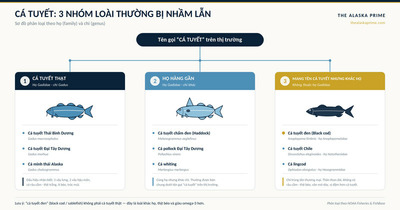
Black cod and regular cod are not the same fish — they're not even in the same family. Black cod (also called sablefish, Anoplopoma fimbria) belongs to the Anoplopomatidae family and carries around 15g of fat per 100g. True cod (Gadus macrocephalus, Gadus morhua) belongs to the Gadidae family and carries just 0.4–0.6g of fat per 100g. That single difference drives everything else: texture, flavor, nutrition, and a price gap of several times over.
Are Black Cod and Cod the Same Fish?
No. They're separate species from separate families. The shared word "cod" is a marketing convention, not a scientific classification.
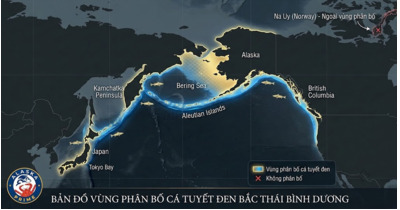
Black cod's real name is sablefish (Anoplopoma fimbria). It lives only in the North Pacific — from Baja California up through Alaska, along the Aleutian chain, into the Bering Sea, and across to Kamchatka and Japan. Fishmongers started calling it "black cod" in the early 1900s because the white, flaky meat sold better under a familiar name.
True cod belongs to the genus Gadus: Pacific cod (Gadus macrocephalus) and Atlantic cod (Gadus morhua).
One biological detail explains most of what follows: sablefish live 300 to 1,500 meters down in cold, dark water and can live more than 90 years. That environment is why they build such a heavy fat layer. Pacific cod live shallower and typically top out around 20 years.
Black Cod vs. Cod: Side-by-Side Comparison
|
Feature |
Black Cod (Sablefish) |
Pacific Cod (True Cod) |
|
Scientific name |
Anoplopoma fimbria |
Gadus macrocephalus |
|
Family |
Anoplopomatidae |
Gadidae |
|
Range |
North Pacific only |
North Pacific & North Atlantic |
|
Depth |
300 – 1,500 m |
50 – 300 m |
|
Lifespan |
90+ years |
~20 years |
|
Skin |
Charcoal to jet black, slight blue sheen |
Gray-brown, mottled |
|
Raw flesh |
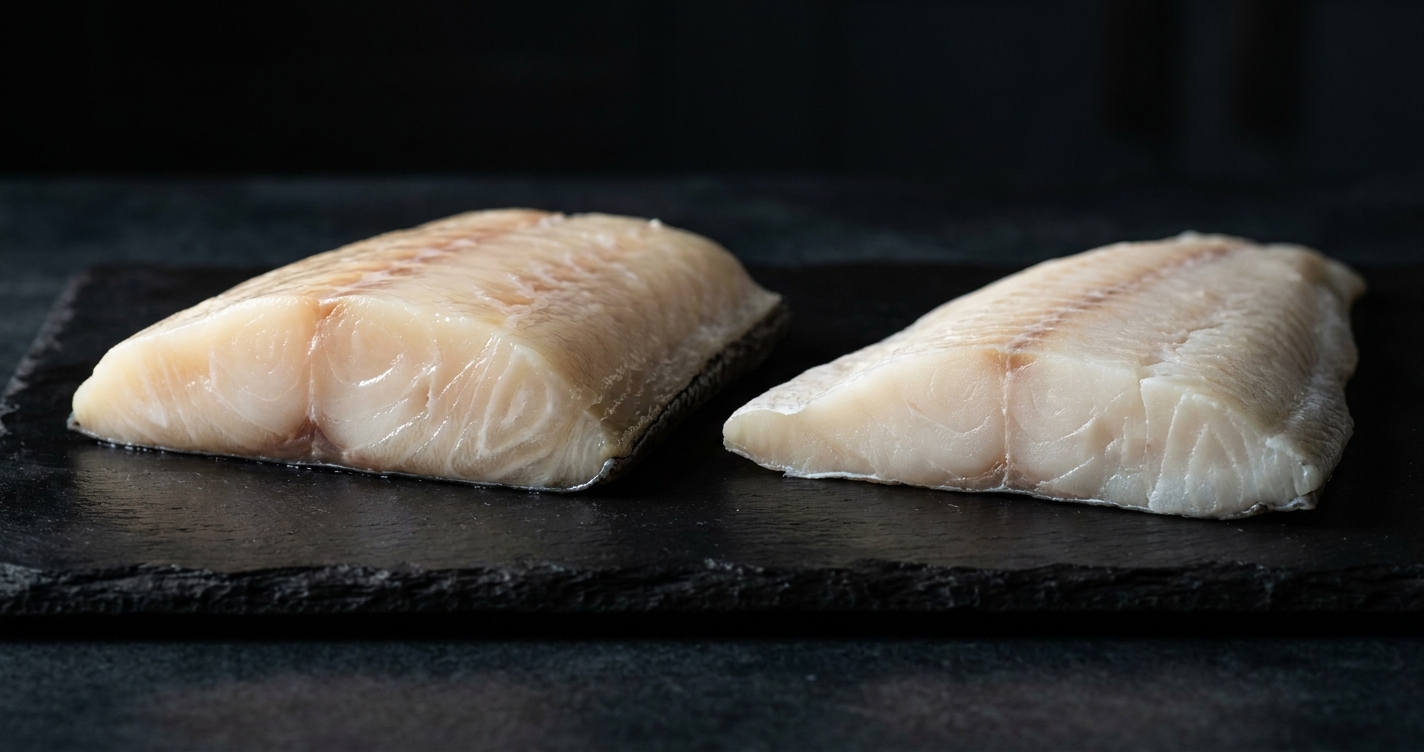
Ivory white with visible fat lines |
Opaque white, no marbling |
|
Fat per 100g |
~15.3 g |
~0.4 – 0.6 g |
|
Calories per 100g (raw) |
~195 kcal |
~69 – 82 kcal |
|
Protein per 100g |
~13.4 g |
~15.3 – 17.9 g |
|
Omega-3 (EPA+DHA) per 100g |
~1,790 mg |
~200 mg |
|
Texture |
Silky, buttery, large flakes |
Firm, lean, fine flakes |
|
Flavor |
Rich, sweet, buttery |
Clean, mild, delicate |
|
Best for |
Miso-glazed, seared, braised, steamed |
Fish & chips, chowder, soups, steaming |
|
Price tier |
Premium |
Everyday |
Nutrition data: USDA FoodData Central and NOAA Fisheries.
How to Tell Them Apart at the Counter
Four checks, ten seconds.
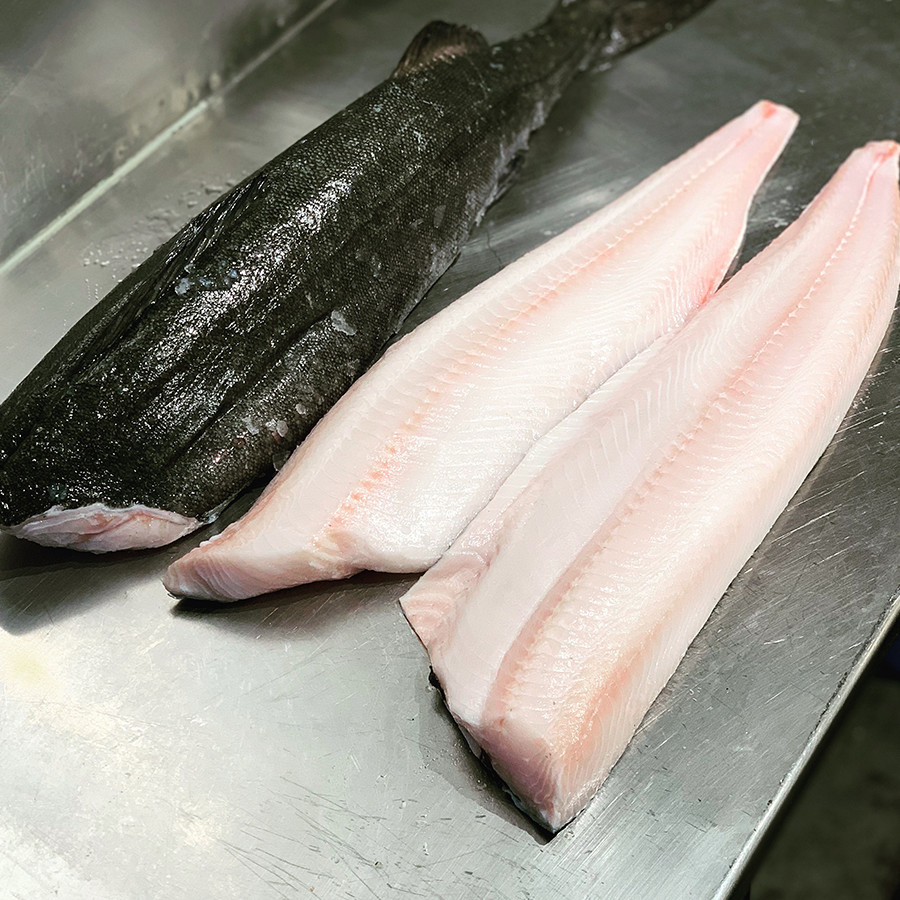
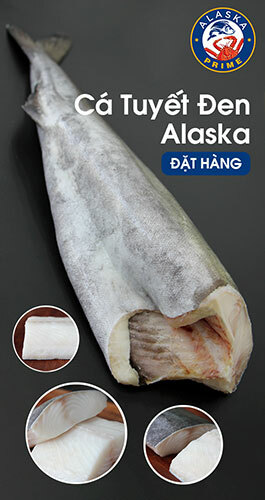
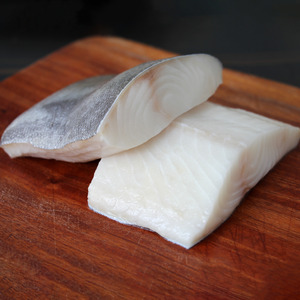
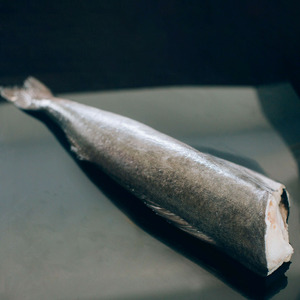
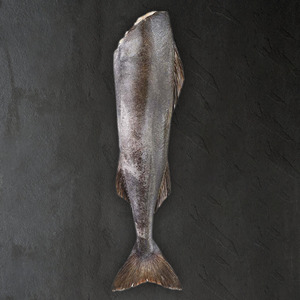
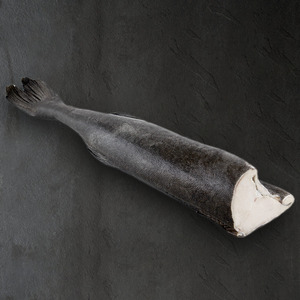
- Skin. Black cod skin is charcoal to jet black and smooth, with a faint blue-metallic sheen at an angle. Cod skin is mottled gray-brown and rougher.
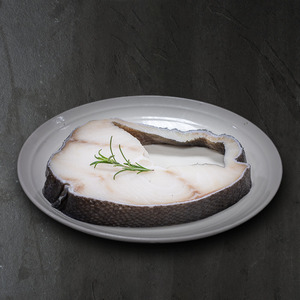
- Marbling. Turn a black cod fillet on its side and you'll see thin white fat lines running through the muscle — the same way marbling shows in beef. Cod has none.
- Thickness and sheen. Black cod fillets are thick with a wet, almost waxy sheen on the cut face. Cod fillets are thinner, drier, and matte.
- Flake size. Press gently — black cod separates into large, moist flakes. Cod breaks into small, fine ones.
The pan test. Set a piece in a dry pan over medium heat. Black cod releases a clear layer of its own fat within 40–60 seconds. Cod releases almost nothing and sticks immediately.
From our own intake inspections at The Alaska Prime: if something is labeled "black cod" but the fillet is thin, chalky white, shows no marbling, and is priced near regular cod — it's almost certainly mislabeled Pacific cod.
Which One Tastes Better?
Neither one wins outright. It depends entirely on how you're cooking it. Black cod wins wherever richness helps. Cod wins wherever a lean, firm bite matters.
Black cod is the better choice for:
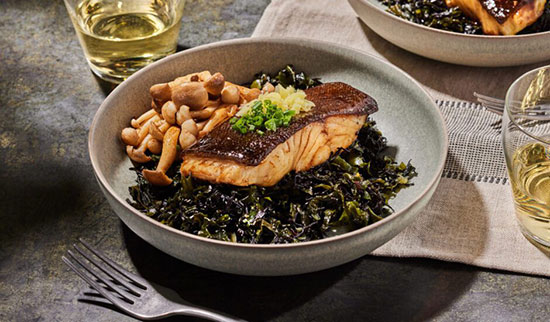
- Miso-glazed or teriyaki broiling — the fat renders and caramelizes into a lacquered crust
- Crispy-skin searing — the skin shatters, the flesh stays moist underneath
- Braising and clay-pot dishes — it won't dry out over a long simmer
- Cantonese-style steaming with soy — richness plays beautifully against soy and ginger
- Saikyo-yaki, the dish that made this fish famous in modern Japanese kitchens
Regular cod is the better choice for:
- Beer-batter fish & chips — lean flesh keeps the crust crisp
- Chowders, stews, and clear soups — it won't make the broth greasy
- Ginger-scallion steaming — clean flavor, traditional profile
- Fish cakes and fish balls — lean protein binds better
Black cod's real advantage for home cooks is margin for error. All that fat means it stays moist even if you overcook it by two or three minutes. Cod is unforgiving — thirty seconds past done and it turns dry and chalky.
Nutrition: Which Is Healthier?
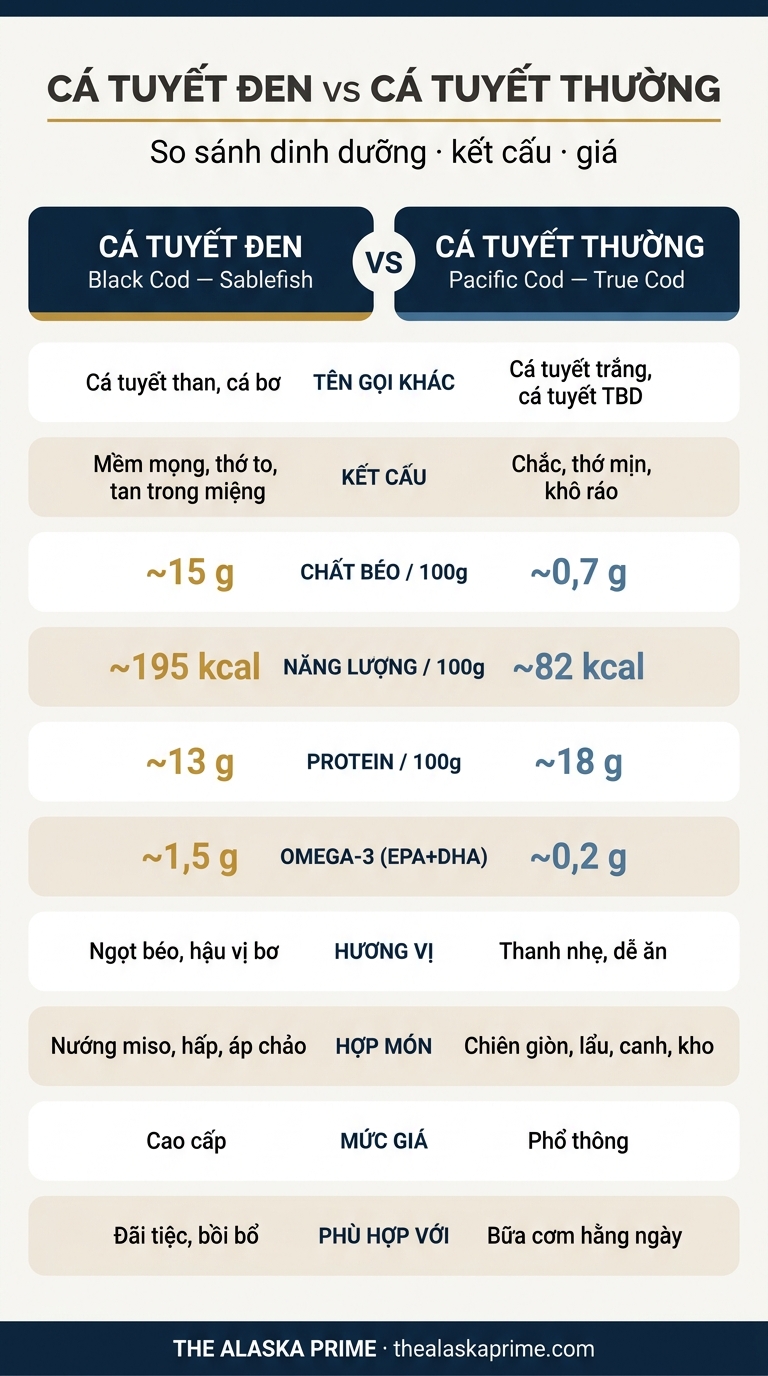
Both are excellent — they just solve different problems. Black cod dominates on omega-3s and vitamin D. Cod dominates on protein-per-calorie.
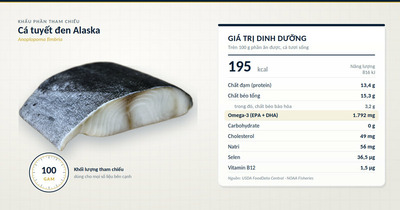
100g of raw black cod delivers roughly 195 calories, 13.4g protein, 15.3g fat, and about 1,790mg of EPA+DHA omega-3s — among the highest of any commercial fish, higher than typical farmed salmon. It also supplies around 36.5mcg of selenium (about 66% of the daily value) plus meaningful vitamin D.
100g of raw Pacific cod delivers only 69–82 calories but 15.3–17.9g of protein — roughly 94% of its calories come from protein.
Go with black cod if you want: more omega-3s for heart and brain health, more vitamin D, or an easy-to-eat protein for older adults and young kids.
Go with cod if you want: calorie control, a cutting or high-protein diet, or fish several times a week without adding fat.
These are reference averages. Actual values shift with season, fish size, and cut.
Why Is Black Cod So Much More Expensive?
The price gap comes from biology, fishing costs, and quota policy — not branding. Four reasons:
- Smaller stock. Sablefish are deep-water, slow-growing, and long-lived. Annual harvest is a small fraction of what Pacific cod produces.
- Harder to catch. Sablefish are fished mainly by longline at several hundred meters — slower, more fuel-intensive, and more labor-intensive than the large-scale trawls used for cod.
- Individual Fishing Quotas. Alaska's sablefish fishery has run under NOAA Fisheries' IFQ program since 1995. Every vessel fishes against an allocated cap. Supply is deliberately constrained to protect the stock.
- Strong export demand. Japan absorbs much of the top-grade sablefish harvest at premium prices, which lifts the global floor.
The premium reflects genuine scarcity, not a markup on the name.
Which Should You Buy?
If you're cooking one or two premium fish dinners a week, buy black cod. If you're eating fish four or five nights a week, cod is the smarter economics.
A practical rotation for a family of four:
- Weeknights: Pacific cod — battered for the kids, in a soup for the adults
- Weekends and guests: black cod, miso-glazed or seared skin-on
- Meals for seniors and toddlers: steamed black cod — soft, easy to eat, omega-3 dense
- Cutting or calorie-controlled meals: steamed cod with ginger
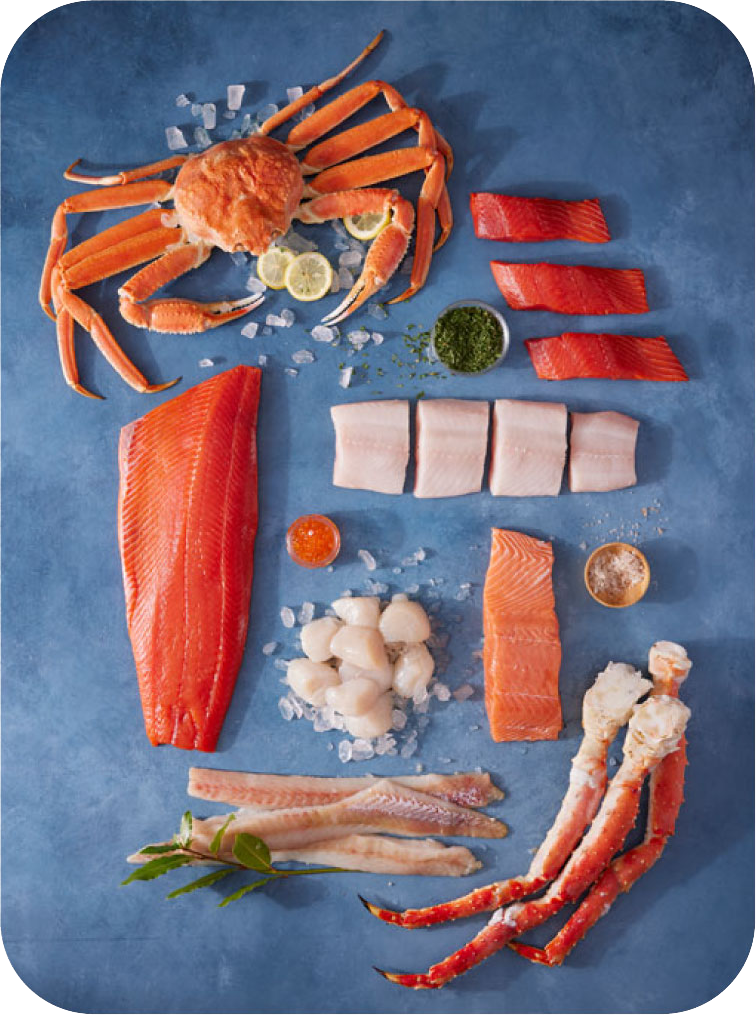
Everything The Alaska Prime carries in both lines is wild-caught in Alaskan waters and IQF frozen piece by piece right after harvest. Browse cuts and sizes under Alaskan black cod and Pacific cod, or see the rest of our imported Alaskan fish selection.
Once you've picked your fish, head to our guide on what to cook with black cod for recipes.
Frequently Asked Questions
Is black cod the same as sablefish? Yes. Sablefish is the official name; black cod is the market name. Both refer to Anoplopoma fimbria.
Is black cod a type of Atlantic cod? No. Atlantic cod (Gadus morhua) is a true cod in the Gadidae family and lives in the North Atlantic. Black cod exists only in the North Pacific and belongs to an entirely different family.
Can kids eat black cod? Yes. It's soft, has few pin bones, and is exceptionally high in DHA. Steam it or braise it lightly rather than using heavy glazes.
Is frozen black cod as good as fresh? Yes, when it's IQF frozen at sea. The high fat content actually protects the texture through freezing better than lean white fish does.

















)